
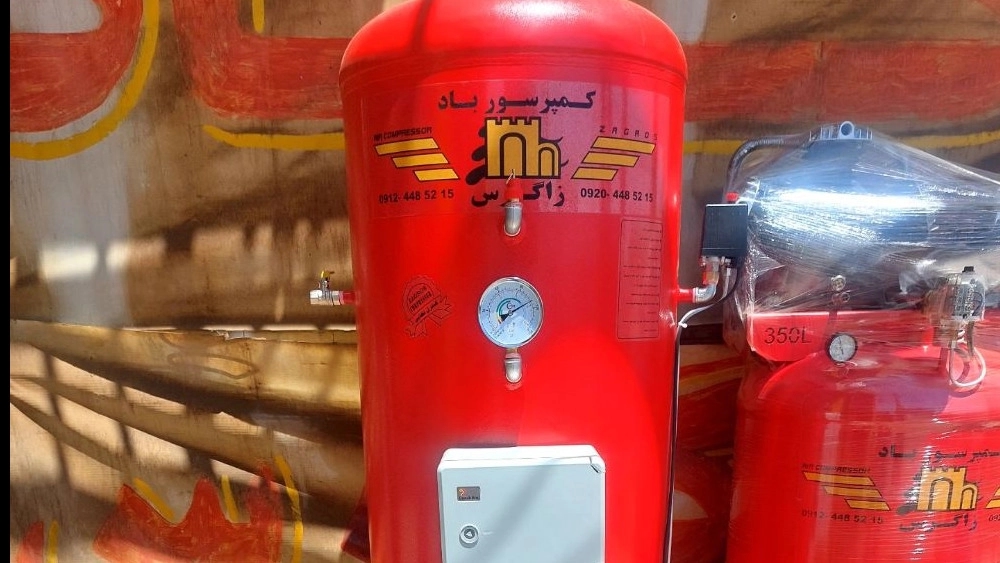
What does the pressure drop in the compressed air system mean?
Before addressing the reasons, we need to know what is meant by pressure drop. Pressure drop refers to the pressure difference between the output of the air compressor and the point of use (where pneumatic tools are used). Some pressure drop (about 2 to 3 PSI) is normal in any system, but if this pressure difference exceeds 10% of the system's working pressure, it is considered a serious problem and requires immediate investigation.
10 main causes of pressure drop in air compressor and its solutions
Pressure drop can be caused by one or a combination of several factors. In the following, we will examine these factors from the simplest to the most complex ones.
1. Air leakage in the system (the most common cause)
Air leaks are the hidden energy thief in your system. Even a small hole can waste a significant amount of compressed air and cause non-stop operation and pressure drop of the air compressor.
Signs:
- Hearing a “hissing” sound from fittings, hoses or valves.
- Compressor running even when no tools are being used.
- Rapid drop in tank pressure after compressor shuts down.
Troubleshooting method:
- Turn off all consumables and allow the compressor to reach maximum pressure and shut off.
- Check all fittings, valves, hoses, couplings and welds on the tank and pipes with a soapy foam spray. The formation of bubbles indicates a leak.
- Pay special attention to points such as the pressure regulator, filters and the drain valve under the tank.
Tighten loose connections, replace Teflon tapes, and replace defective parts or punctured hoses. It is estimated that fixing leaks can save up to 30% in energy consumption. If you have trouble finding the exact location of the leak, Zagros compressor rescue specialists are at your service with advanced leak detection equipment.
2. Dirty or clogged intake air filter
The air filter is your air compressor's first line of defense against dust. If this filter is blocked, the compressor must consume more energy to suck the air it needs, which "shortness of breath" directly leads to a decrease in the volume of the outgoing air and pressure drop.
Troubleshooting method:
Visually inspect the air filter. The presence of thick dust, oil or clogging indicates the need for replacement or cleaning.
Solution:
Paper filters should be replaced at regular intervals (usually every 200 to 500 hours of operation, depending on the environment). Sponge filters can be cleaned with air. Never turn on the compressor without a filter.
3. Choosing the wrong size of pipes and hoses
Using pipes or hoses with a diameter smaller than the standard is like trying to pass a large volume of water through a narrow straw! This will create a lot of resistance in the air flow path and cause the pressure drop of the wind compressor at the end of the intake line.
Troubleshooting method:
Compare the diameter of your piping and hoses with the compressor manufacturer's recommendations or standard engineering tables. As a general rule, the longer the piping, the larger its diameter should be.
Solution:
Review your piping system and, if necessary, replace it with pipes of a suitable diameter. Also, avoid making sharp 90-degree bends and unnecessary connections that disrupt the flow. Our experts at Emdad Compressor Zagros can advise you on the design and implementation of an optimal piping system.
4. clogging in the separator filter (in screw compressors)
In oil-injected screw compressors, the separator filter is responsible for separating oil from compressed air. Over time, this filter becomes clogged due to the absorption of oil particles and impurities and acts as a barrier to air flow. This is one of the main causes of air screw compressor pressure drop.
- Symptoms:
- Increasing the pressure difference between the separator tank and the outlet of the device.
- The presence of oil in the outlet air.
- Increasing the working temperature of the compressor.
- Solution:
The separator filter is a consumable part and should be replaced according to the manufacturer's instructions (usually every 2000 to 4000 hours). In addition to the pressure drop, the delay in replacing it can cause serious damage to the air-end unit. Contact us to supply and repair the air compressor and its parts.
5. Incorrect operation of the inlet valve
The Unloader Valve is responsible for controlling the air entering the air conditioning unit. If this valve is not opened correctly or has a technical defect, the volume of air entering the compressor is limited and as a result the output pressure does not reach the desired level.
Troubleshooting method:
Check the mechanical operation of the valve while the compressor is running. Make sure it opens completely. Also check its pneumatic or electric steering paths.
Solution:
This is a specialized repair. It may be necessary to clean, replace the diaphragm, solenoid or its repair kit. It is recommended that this be done by an experienced technician. The Zagros compressor relief team is ready to provide wind compressor repair services in Chahardangeh and suburbs.
6. Wear of piston rings (in piston compressors)
In piston compressors, rings have the task of sealing the combustion chamber and preventing air from escaping from the side of the piston. With the passage of time and a lot of operation, these rings are worn out and can no longer seal the cylinder well. This "air escape" causes a sharp reduction in the efficiency and pressure drop of the air compressor.
- Symptoms:
- Perceptible decrease in power and tank filling speed.
- Excessive oil in the exhaust air (oil burning).
- Abnormal noise from the cylinder part.
- Solution:
Replacing the piston rings is a major repair that requires the complete opening of the air conditioning unit. In this process, the condition of the cylinder and piston is usually checked. This work should be done by experts.
7. Failure or non-adjustment of the pressure switch (Pressure Switch)
The pressure switch is the mastermind of your air compressor that issues the on/off command based on the tank pressure. If this part is damaged or its settings are messed up, the compressor may shut down before reaching the maximum pressure and you will experience a pressure drop.
Troubleshooting method:
Compare the cut-out and cut-in pressure of the device with the numbers on the pressure gauge. If the compressor shuts off at a pressure lower than the set limit, the problem is the pressure switch.
Solution:
First, try to adjust the pressure adjustment screw of the switch according to its manual. If the problem is not solved, its internal contacts are probably damaged and should be replaced.
8. Air consumption demand exceeds the production capacity of the compressor
Sometimes the cause of the air compressor pressure drop has nothing to do with the failure of the device! If you have added new appliances to your system or are using several high-powered appliances at the same time, your total air consumption (CFM) may exceed the compressor's capacity.
Troubleshooting method:
Add up the air consumption of all your tools (usually listed on them) and compare it to the air capacity of your compressor (listed on the nameplate).
Solution:
In this case, there are two ways: manage air consumption (use tools in turn) or upgrade the compressor to a higher capacity model. Emdad Kompressor Zagros, as a wind compressor manufacturer in Chahardange, can provide the necessary advice to choose the right compressor for your needs.
9. Power transmission belt problems
In belt compressors, the looseness or wear of the belt causes it to slide on the pulley and the engine power is not fully transferred to the air conditioning unit. This slippage means reducing the speed of the compressor and, as a result, reducing the volume of produced air and pressure drop.
Troubleshooting method:
Check the belt tension. The strap should have about 1 to 1.5 cm of flexibility. Also, look for signs of cracking, rotting or polishing of the inner surface of the belt.
Solution:
Adjust the belt or if it is worn, replace it with a new and high-quality belt.
10. Malfunction of one-way valve (Check Valve)
The check valve is a piece that is placed between the aeration unit and the tank and allows air from the compressor to enter the tank, but prevents it from returning. If this valve is damaged and has a leak, the compressed air in the tank returns to the cylinder head and when the compressor shuts off, the pressure drops quickly.
- Symptoms:
- Rapid release of pressure from the tank after shutdown.
- Hearing the sound of air escaping from the inlet filter after shutdown.
- Difficult starting of the compressor at the next start (because the cylinder head is under pressure).
- Solution:
When should we call an expert to repair the air compressor?
You can do some simple things yourself, like cleaning the air filter or finding minor leaks. But in the following cases, to prevent further damage to the device and ensure safety, be sure to contact a specialized center:
- Electrical problems: such as failure of the pressure switch or problems related to the electrical panel.
- Basic repairs: such as replacing the piston ring, bearings or repairing the screw air conditioner unit.
- Not recognizing the cause of the problem: if after checking the above you are still facing the pressure drop of the air compressor.
- Need for original parts: to ensure the correct operation and long life of the device.
Emdad Compressor Zagros, with years of experience in the field of production and repair of piston and screw air compressors, as well as the construction of pressure vessels, is ready to provide comprehensive services in Chahardange area of Tehran and its suburbs. Using modern technical knowledge and advanced equipment, our expert team diagnoses the pressure drop problem of your wind compressor as soon as possible and solves it fundamentally using standard spare parts.